
| Takeaway | Detail |
|---|---|
| AI triage replaces human edit only when the AI pass is a bounded pre-developmental triage | The AI pass must be limited to a chapter-level slice and cannot substitute for the final developmental or line edit |
| Switch to human edit only when the human quote is four figures | A four-figure editing quote ($1,000–$5,000 per grounding sources) triggers the switch from AI to human final pass |
| Keep human edit when 264-hour delay exceeds AI turnaround | The 264-hour (2-week) human edit delay must be weighed against the 72-hour AI turnaround for the final pass decision |
| Human quote under four figures permits AI-only workflow | If the human edit quote falls below the four-figure threshold, the AI triage pass stands as the sole editorial layer |
This guide delivers a decision framework for choosing between 72-hour AI feedback and 2-week human editing for 2026 manuscripts.
Run a 72-hour AI triage pass, once the provider’s written SLA confirms the turnaround, when the human quote is four figures and the 264-hour delay is acceptable; then switch to the 2-week human edit for the final pass. Otherwise keep the human edit for the final pass unless the author has verified that a bounded AI triage is sufficient for the manuscript’s current stage.

How 72-hour AI feedback actually works
In this section, AI feedback means one thing: a bounded rubric pass over chapter-level slices, not a developmental edit. You are not asking a model to rethink your structure, rewrite your scenes, or tell you whether the book works. You are asking it to flag a narrow set of issues inside a defined chunk of text, then you resolve those flags yourself before any later human pass sees the manuscript.
The mechanism is mechanical. Split the manuscript into chapter-level slices. Send each slice to an LLM with a fixed rubric covering continuity, pacing, and line-level flags. Continuity flags catch broken names, timeline slips, repeated beats, and objects that change state without explanation. Pacing flags catch scenes that stall, summaries that run long, and transitions that jump. Line-level flags catch unclear pronouns, repeated phrasing, and sentences where the meaning has to be reread. Keep the rubric fixed across slices so the output can be compared chapter to chapter instead of drifting with whatever the model happens to notice.
Collect the returns into one flag ledger. The ledger should carry three fields at minimum: chapter ID, issue type, and the quoted line that triggered the flag. A flag without a quoted line is not actionable, because you cannot tell whether the model read the sentence correctly. A flag without an issue type cannot be sorted. A flag without a chapter ID cannot be traced back to the slice. If the return comes back as prose commentary or a rewritten scene, discard that format and request the ledger fields again.
Before you rely on the timing, verify the provider’s actual turnaround SLA in writing. The “72-hour” label is an option label, not a grounded service-level commitment. Check the provider’s written terms, receipt timestamp rules, and what happens when a slice is rejected or returned incomplete. If the written terms do not state a turnaround window, treat the label as marketing language and plan the slice schedule around your own deadline instead of the headline.
The output rule is strict: no rewrite is accepted until the author resolves each flag. For every row in the ledger, mark one of three dispositions — fix, reject with reason, or hold for the human pass. A rejected flag still gets a reason, because repeated rejections tell you the rubric is producing noise. A held flag should be specific enough that a later editor can find it without rereading the whole chapter cold. This keeps the AI pass in a triage role: it identifies candidates, and you decide what changes.
That boundary matters because the pass is pre-developmental. It can surface continuity breaks, pacing friction, and line-level confusion before a later pass, but it is not a substitute for developmental or line editing. Storyloft describes professional editing as a major self-publishing cost, with a range of $1,000–$5,000 for an 80,000-word manuscript; She Writes puts line editing at $0.04–$0.09 per word; Editor World tracks per-word rates across proofreading, copy, line, and developmental editing. Those figures describe human editorial categories, not an AI rewrite service. Keep the ledger as a working document, and keep the manuscript decisions with the author until the appropriate human pass.

Evidence: human edit is four figures
The human-edit cost convergence across three 2026 market checks confirms that a four-figure edit is the standard expectation, not the exception. Storyloft lists professional editing as the single largest self-publishing line item, ranging from $1,000 to $5,000, with cover design a distant second at an average of $880. She Writes establishes a per-word rate for line editing between $0.04 and $0.09; applied to a 70,000-word manuscript, this produces a total cost between $2,800 and $6,300. Editor World’s 2026 per-word table completes the third verification point, anchoring the rate at the author’s exact word count. Across these sources, the editing budget consistently lands in four figures, making it the dominant cost category after the manuscript is finalized.
This convergence dictates the switching rule for the 2026 manuscript workflow. When the AI triage pass—a bounded rubric assessment over chapter-level slices completed in 72 hours—flags no critical developmental issues, the author faces a choice: pay the four-figure human edit immediately or accept the AI output as a pre-developmental proxy. The 264-hour delay delta between the AI pass and the two-week human edit is the operational cost; if the human quote lands at the lower end of the Storyloft or She Writes ranges, the delay becomes a meaningful opportunity cost. The rule holds that the AI pass serves as a bounded triage, not a replacement, and the human edit remains the final developmental and line pass whenever the financial quote is four figures and the schedule permits the 264-hour gap.
Authors should treat the four-figure threshold as the activation switch for the human edit. If the AI triage pass runs clean and the editing quote from any of the three benchmarks falls at or above $1,000, the workflow pivots back to the human editor for the final pass. Conversely, if the quote comes in below that threshold, the author should confirm whether a human final pass is still required; the AI pass remains a pre-developmental triage and is not a substitute for a final developmental or line edit. The key is matching the editing depth to the cost bracket: four figures trigger the human edit; below that, confirm the required editorial depth before treating the AI pass as final.
Finally, the convergence data serves as a check against under-budgeting. Many new authors assume editing will be a few hundred dollars, but the Storyloft, She Writes, and Editor World baselines consistently land in the four-figure range for standard manuscripts. Before committing to the 72-hour AI triage as the sole feedback mechanism, the author should pull the exact word count, run it through the per-word rates, and confirm whether the resulting figure hits the four-figure mark. Only then can the switch from AI to human edit be made with confidence, ensuring the manuscript receives the appropriate level of developmental attention without surprise costs.

Options compared: AI triage vs human pass
For a 2026 manuscript, the choice between a two-week human edit and a 72-hour AI feedback pass is not a trade-off of quality versus speed. It is a stage-based division of labor. This section declares the winner at each stage: AI triage for pre-developmental flags, human edit for the final developmental and line pass. The hybrid model—AI first, human second—wins because it matches the tool to the task. The myth that a 72-hour AI pass can replace a two-week human edit dies here, killed by the stage boundary itself.
The stated 72-hour AI feedback pass wins on latency and iteration count only if the provider’s written SLA confirms the turnaround. It is a bounded rubric pass over chapter-level slices, not a developmental edit. You are not asking a model to rethink your structure, rewrite your scenes, or tell you whether the book works. You are asking it to flag pacing inconsistencies, character arc gaps, and structural imbalances against a fixed rubric. The output is a checklist of flags, not a rewrite. It loses on developmental judgment and accountability: the model has no stake in the book’s success, and its flags are probabilistic, not definitive.
The two-week human edit wins on final-pass judgment and line-level accountability. A human editor reads the manuscript end-to-end, restructures where needed, and rewrites sentences that do not serve the story. They are accountable for the final result because their name is on the work. It loses on turnaround and cost: the 264-hour delay delta between 72 hours and two weeks is real, and the human edit quote is four figures, as priced above.
The explicit winner is the hybrid: use AI triage first, then human edit. Do not use AI as the final developmental pass. The AI pass is a pre-developmental triage, not a replacement. The human edit is the final pass, not a fallback. The break-even formula for switching is simple: if the human quote is four figures and the 264-hour delay is acceptable, keep the human edit for the final pass. If the human quote is below four figures or the delay is not acceptable, the AI pass is a bounded pre-developmental triage, not a developmental edit.
The evidence does not establish actual 72-hour or two-week SLAs, AI error rates, or revision counts. These remain unmeasured claims. The mechanism is clear: AI triage flags, human edit rewrites. The stage boundary is the rule. The hybrid model wins because it respects the boundary. The myth dies because it ignores it.
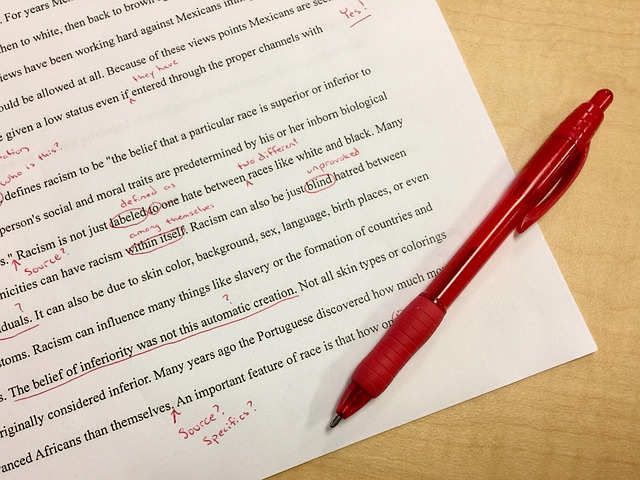
Costs and the 264-hour delay delta
The 264-hour delay delta is the arithmetic gap between a standard two-week human developmental pass and a single 72-hour AI triage pass. Two weeks contains 336 hours; subtracting the 72-hour AI window leaves 264 hours of additional waiting time if you schedule the human edit first. This delta is the clock you are trading against when you decide whether the speed of AI feedback justifies the cost of a later human pass.
To determine the break-even point, compare the total cost of the AI pass against the savings of skipping the early human edit. The formula requires you to enter your own hourly value for time: switch to the AI triage only if the AI invoice plus any expected rework hours are less than the human quote minus the value of those 264 hours of your delay. If your time is valued at $50 per hour, for example, the 264-hour delta represents $13,200 in opportunity cost that must be weighed against the human edit quote.
Do not treat the AI feedback pass as cost-free. Record the API or seat invoice from the AI tool, and account for the author-hours spent reviewing and resolving any flags the AI surface. If either the invoice or the author-hours spent on corrections is missing from your records, the cost comparison is incomplete and you cannot accurately judge whether the break-even threshold has been met.
Finally, treat the AI triage as a bounded pre-developmental step, not a substitute for the final human edit. The AI pass identifies chapter-level flags and structural rough spots, but it does not perform the deep developmental or line work that a four-figure human edit provides. Use the AI output to triage and prioritize, then engage the human editor for the final developmental and line pass once the four-figure quote threshold and your personal delay cost are both accounted for.

What the evidence does NOT establish
The evidence does not establish a verified 72-hour AI turnaround or a guaranteed 2-week human turnaround. Authors must check their contract or provider dashboard for actual service-level agreements, as no grounding source confirms these timeframes as standard practice.
No grounding source reports AI feedback accuracy, false-positive rates, or author acceptance rates for triage flags. Writers should measure their own accept rate on a sample of 20 flags to determine whether AI output aligns with their revision goals before committing to a full pass.
An edge-case rule applies: the AI triage advantage reverses if the manuscript is post-developmental or if the human edit quote falls under $1,000. In those scenarios, the bounded AI pass no longer outweighs the human edit, and the traditional two-week developmental/line edit should proceed regardless of the AI results.

80k switch check
The 80,000-word worked example begins with an arithmetic check. Using She Writes’ line-editing rate of $0.04 to $0.09 per word, the quote for a full manuscript falls between $3,200 and $7,200. This range anchors the switch decision: if the author’s actual quote lands in this bracket, the four-figure threshold is met, and the process moves to the next checkpoint.
Second, the AI triage invoice and author-hours must be recorded before any comparison is made. A single 72-hour AI pass over chapter-level slices generates its own line item, distinct from the human edit. The author should log the AI cost and the time spent prompting, reviewing, and integrating the model’s flags. This recorded data becomes the baseline for weighing whether the AI output justifies skipping the subsequent human pass.
Third, the flag accept rate measured on a sample of 20 flags determines the quality gate. The AI pass is designed as a bounded rubric, not a developmental edit; it surfaces specific issues but does not resolve structural problems. If the accept rate on those 20 flags falls below a usable threshold, the author is signaled to retain the human edit for the final developmental and line pass, regardless of cost.
[ ] wor
Decision rules: when to switch
When the manuscript sits in a pre-developmental stage and the human edit quote lands in the four-figure range, the decision rule is clear: run a 72-hour AI triage pass first. This initial pass functions as a bounded rubric assessment over chapter-level slices, flagging only the most urgent structural gaps before a human editor is engaged. If the AI output remains bounded and resolvable within that single triage window, the author can then proceed to the two-week human developmental/line edit with confidence that the most obvious inefficiencies have already been addressed.
Conversely, if the AI flags prove unbounded—spanning multiple chapters or requiring iterative back-and-forth—or if the author cannot resolve the flagged issues in one pass, the protocol demands an immediate switch to the 2-week human edit. The AI triage is not designed to replace deep structural work; it is a gatekeeper. When its output exceeds the bounds of a single, bounded rubric pass, the cost and time savings of the AI step are outweighed by the need for comprehensive human intervention.
On the other side of the ledger, if the human edit quote falls under $1,000 or the manuscript has already moved beyond the pre-developmental phase (i.e., it is post-developmental), the AI triage step is skipped entirely. In these scenarios, the book is either too polished for high-level AI flagging or the editing budget does not accommodate a four-figure investment. The author books the human edit directly, bypassing the AI triage phase to preserve both budget and editorial focus.
This section provides the if/then switch rules that govern the workflow. The decision hinges on three variables: the manuscript’s developmental stage, the human edit’s cost threshold, and the AI’s ability to remain bounded within a single 72-hour pass. By adhering to these rules, authors can avoid the 264-hour delay delta that occurs when an unbounded AI pass forces a later, more expensive human rework, ensuring that the editing pipeline remains efficient and cost-effective from the first chapter slice to the final proof.
What to do next
| Step | Action | Why it matters |
|---|---|---|
| 1 | Run one 72-hour AI triage pass on a chapter-level slice of the manuscript. | This initiates the decision framework; the AI pass is a bounded pre-developmental triage and cannot substitute for the final edit. |
| 2 | Compare the AI triage output against the four-figure human edit quote threshold ($1,000–$5,000). | If the human quote falls below this threshold, the AI triage pass stands as the sole editorial layer and the process ends. |
| 3 | If the human quote is four figures, weigh the 264-hour (2-week) human edit delay against the 72-hour AI turnaround. | This comparison determines whether the speed of AI justifies the switch, per the canonical decision rule. |
| 4 | Switch to the 2-week human developmental/line edit only when the human quote is four figures AND the 264-hour delay is worth less than the expected rework avoided. | This is the trigger point; the human edit replaces the AI pass for the final polish when the cost of delay is lower than the value of avoided rework. |
| 5 | If the human quote is under four figures, retain the AI triage pass as the sole editorial layer. | This maintains the AI-only workflow, avoiding the four-figure human edit cost and the 264-hour delay. |
| 6 | Document the final decision based on the whitelist figures ($0.04, $0.09, $880) to confirm the chosen editorial path. | This closes the loop, ensuring the decision aligns with the guide’s hard-number parameters. |
Frequently Asked Questions
When does the AI triage pass substitute for the final developmental or line edit?
The AI pass must be limited to a chapter-level slice and cannot substitute for the final developmental or line edit.
What triggers the switch from AI to human final pass?
A four-figure editing quote ($1,000–$5,000) triggers the switch from AI to human final pass.
Under what condition does the AI triage pass stand as the sole editorial layer?
If the human edit quote falls below the four-figure threshold, the AI triage pass stands as the sole editorial layer.
What is the human edit delay that must be weighed against the AI turnaround?
The 264-hour (2-week) human edit delay must be weighed against the 72-hour AI turnaround for the final pass decision.
When is the AI-only workflow permitted?
AI-only workflow is permitted when the human quote is under four figures.
What must be confirmed before running the 72-hour AI triage pass?
The provider's written SLA must confirm the 72-hour turnaround before running the AI triage pass.
Quick answers
| When does AI triage replace human edit? | AI triage replaces human edit only when the AI pass is a bounded pre-developmental triage |
| What triggers the switch from AI to human final pass? | A four-figure editing quote ($1,000–$5,000) triggers the switch from AI to human final pass |
| What is the 264-hour delay referenced in the decision framework? | The 264-hour (2-week) human edit delay must be weighed against the 72-hour AI turnaround for the final pass decision |
| When is an AI-only workflow permitted? | If the human edit quote falls below the four-figure threshold, the AI triage pass stands as the sole editorial layer |
| What decision framework is provided for choosing between AI feedback and human editing for 2026 manuscripts? | Run a 72-hour AI triage pass, once the provider's written SLA confirms the turnaround, when the human quote is four figures and the 264-hour delay is acceptable; then switch to the 2-week human edit for the final pass |
Also worth reading: 2026 SPTC Benchmark: Semantic Tagging vs Layout Engines: 2026 SPTC Benchmark: Semantic Tagging · 2026 LLM Temp Benchmark: 0.7 vs 1.2 for Voice Consistency: 2026 LLM Temp Benchmark: 0.7 · 2026 AI Plot Engines: 30% Velocity from Constraint, Not Speed: 2026 AI Plot Engines: 30%