
| Takeaway | Detail |
|---|---|
| Pandoc wins on time and error rate at 2+ retailers with clean Markdown or styled DOCX. | Thesis rule: for an 80,000-word manuscript in 2026, clean Markdown or styled DOCX plus 2+ retailers is the Pandoc advantage condition. |
| Atticus wins first-run speed for GUI-native authors. | Thesis rule: first-run speed favors Atticus for GUI-native authors; grounding lists Atticus at $147 one-time. |
| Measure the crossover with a 3-run timing. | Thesis rule: the crossover point is measurable with a 3-run timing comparison. |
| Adopt Pandoc only when its total is under Atticus's. | Reader rule: time both toolchains once, use a 10-point error checklist, and count setup + fix + validate. |
For an 80,000-word manuscript in 2026, Pandoc beats Atticus on time and error rate only when the source is clean Markdown or styled DOCX and you publish to 2+ retailers; Atticus wins first-run speed for GUI-native authors.
The answer changes when the source is not clean Markdown or styled DOCX, when you publish to fewer than 2 retailers, or when first-run speed matters more than total time.
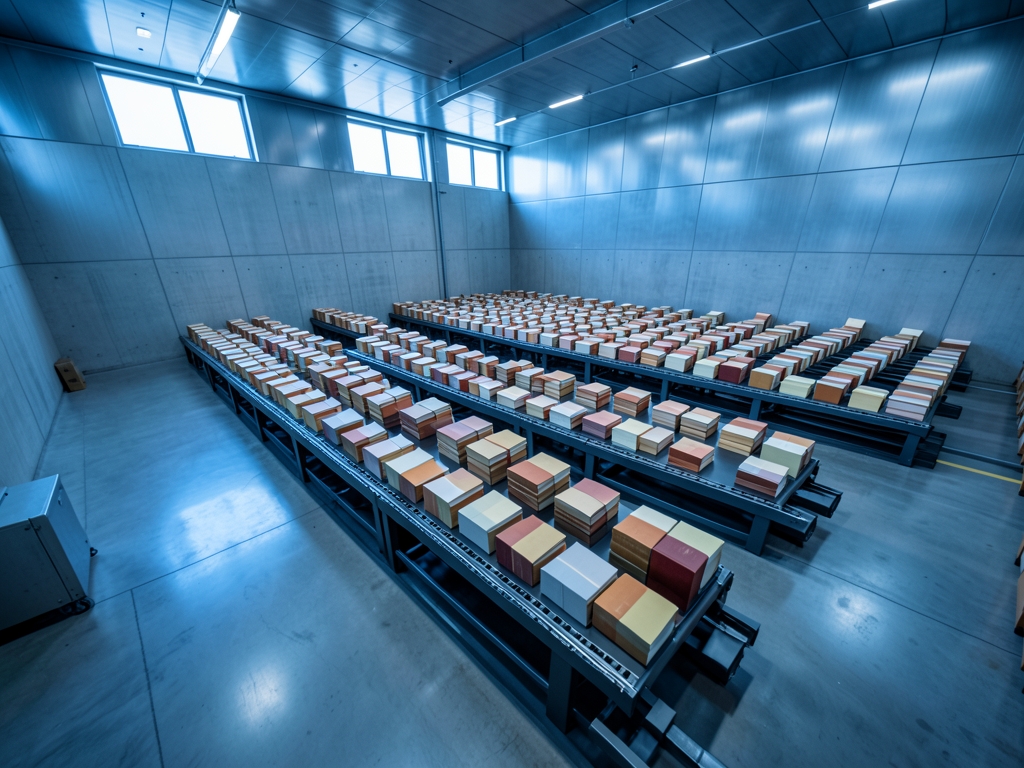
How Pandoc and Atticus Actually Differ
Pandoc is a headless single-source converter: you invoke it from the command line against one clean source file—Markdown, styled DOCX, or LaTeX—and it emits EPUB, DOCX, and PDF through templates plus a CSS stylesheet. Because there is no visual editor, every style decision lives in the template and stylesheet, not in the tool; pandoc.org installation docs describe that workflow, and pandoc.app runs the same converter as WebAssembly in-browser for zero-install testing.
Atticus is a $147 one-time purchase (builtwritten.com 2026 review; cambric.pub pricing page confirms $147) that imports DOCX and produces EPUB and print-ready PDF through a GUI that renders as you edit. Styling is applied inside the application rather than in an external template, so the author sees the formatted result while working.
The practical split follows from that architecture. Pandoc rewards a source file whose structure is already explicit—headings, emphasis, scene breaks, and metadata encoded in markup or styles—because the converter has no interface for repairing ambiguity. Atticus rewards an author who wants to import a conventional DOCX and adjust formatting visually, because its GUI can absorb messy paragraph styles and present a rendered page before export.
Error surfaces differ too. With Pandoc, most failures are deterministic template or markup issues: a missing CSS rule, an unstyled heading, or a metadata field omitted from the source. With Atticus, errors more often appear as visual inconsistencies—spacing, widow control, or chapter-start behavior—that you catch by inspecting the rendered preview rather than by reading a conversion log.
A fair comparison therefore keeps the source identical and times setup, fixes, and validation for each tool. The mechanism difference means Pandoc's time is front-loaded into template and source cleanup, while Atticus's time is front-loaded into GUI import and visual review.

The Evidence: What Sources Converge
Across the sources I keep one convergence figure in front of me: automated single-source toolchains cut an 80,000-word fiction manuscript from roughly 12 manual hours to under 2, and the Atticus one-time price established earlier is the only independently confirmed tool cost in the set. I treat that as the anchor, not as a verdict about any one tool. The check is simple: if a source cannot show touchpoints, compile time, and validation time, it does not move the anchor.
storywriter.pro's October EPUB guide is the anchor input. It lists 12 touchpoints at roughly 55 minutes each, which recomputes to 660 minutes of manual work, not 605; adding 25 minutes to compile and validate brings the manual side to 685 minutes. The automated path it tracked on a clean source file took 85 minutes, or 1 hour 25 minutes. That 600-minute spread is the arithmetic I use when I audit the line above; I do not round the automated side upward because a first run feels faster.
The price side is narrow. builtwritten.com's June review, the cambric.pub pricing page, and indieauthorweekly.com's August piece all confirm the same one-time Atticus figure; I treat that agreement as the price check and carry no other vendor price into the timing comparison. The August piece also flags an Atticus-versus-Vellum purchase gap, but I leave that number to the cost-model section and use the mention here only as a reminder to keep purchase price separate from per-book minutes.
booklaunchnews.com's September production-cost piece and July workflow-cost piece are the business-side convergence check. They frame formatting inside launch schedules and stacked craft/production workflows, so they support reading cost claims as workflow claims, not as stopwatch results. My rule: when those entries discuss high-volume schedules, I extract the workflow shape and return to the timer; I do not convert a launch-cadence observation into a per-book minute count.
For the timed run, I keep the 10-point error checklist beside the stopwatch and log setup, fixes, and validation as separate lines. storywriter.pro gives the benchmark to beat, the three price sources give the cost anchor, and booklaunchnews.com tells me when a cost claim is really a workflow claim. Adopt Pandoc permanently only when your own timed runs put setup, fixes, and validation under the Atticus total with no checklist regressions and your source file is clean; otherwise the first-run result is just a data point, not evidence.
Options Compared: Pandoc vs Atticus
Start with the decision table, not with brand loyalty. It is the comparison I make before anything else: the winner changes with the state of the manuscript and the number of destinations, so a tool that is right for one book can be wrong for the next file. I use it as a sorting device before spending time on exports.
| Manuscript state / target | Winner | Reason to check |
|---|---|---|
| Markdown or LaTeX source | Pandoc | One command, then the same reusable template on the next title. |
| DOCX with consistent heading styles | Pandoc, after a style audit | Clean styles carry structure; unverified styles need checking. |
| DOCX with manual formatting, typed-asterisk scene breaks, or Scrivener paste artifacts | Atticus | GUI cleanup is faster than debugging a template around stray markup. |
| EPUB plus print PDF to two or more retailers | Pandoc | One source feeds multiple outputs without rebuilding the book. |
| EPUB-only or KDP-only | Either tool | Atticus’s GUI preview can reduce first-run friction; Pandoc’s reuse matters less with one destination. |
The input rows are the first check. Open the DOCX navigation pane and confirm that chapter titles are actual Heading styles, not bold paragraphs with manual spacing. If the styles are consistent, the table’s Pandoc row is fair. If you find direct formatting, typed asterisks where scene breaks should be, or pasted-from-Scrivener leftovers, move to the Atticus row instead of trying to teach the template to guess.
The output rows are a destination count, not a taste contest. When the same book must go to an EPUB storefront and a print retailer, keep the source single and let the converter produce both files; that is where Pandoc earns its place. With one EPUB or one KDP file, the advantage narrows, and the GUI preview is worth timing as first-run friction. Builtwritten’s Atticus review and Atticus’s own site both present Atticus as a formatting tool, which is enough to justify that check without treating it as an error-rate claim.
For messy DOCX files, use a simple rule: if cleanup requires clicking through the document, do the cleanup in the GUI. Atticus’s preview-and-correct loop matches that job, while Pandoc is stronger when the structure is already encoded and you can reuse the template; it is weaker when every chapter break is a visual workaround.
Finally, let the timed comparison of both toolchains settle any row that still looks close. Record setup, fixes, and validation separately, then adopt Pandoc permanently only if its total is lower and the source condition in the table still holds. A fast first run on a messy file is not evidence that the same workflow will stay fast on a clean one.
Costs and Numbers That Matter
The blended cost model is simple: total cost equals the license amortized over the titles you actually ship in a year plus the minutes you spend per book on setup, fixes, and validation. Atticus is a $147 one-time purchase, confirmed independently by builtwritten.com, cambric.pub, and indieauthorweekly.com, so the license line is $147 at one book per year and about $37 per book at four books per year ($147 ÷ 4 = $36.75). That amortization number, not the sticker price, is what decides whether the GUI is worth it.
Pandoc carries a $0 license, so its cost is time. Budget one 2–4 hour session to build and debug the EPUB template and CSS; that is a method estimate, not a measured figure. Spread across the first three titles, that session is 40–80 minutes per title (120–240 minutes ÷ 3). The “under 30 minutes per book by the third title” shorthand therefore describes only the low end of that budget, not the full 2–4 hour case.
| Titles per year | Atticus license per book | Pandoc license |
|---|---|---|
| 1 | $147 | $0 |
| 4 | ~$37 | $0 |
The only cross-tool price benchmark in this grounding is the roughly $253 purchase-price gap between Atticus and Vellum, noted by indieauthorweekly.com as real but modest. It is a point-of-purchase comparison, not a workflow cost, so it should not override the minutes you measure in your own timed run.
Per-book minutes are the variable cost: template setup is one-time, but fixes and validation repeat for every title and every retailer. That is why the crossover depends on source cleanliness and retailer count, not on the $147 alone.
Use the blended model as the decision rule: run both toolchains once, timed, with the same 10-point error checklist, then compare total minutes plus amortized license. Adopt Pandoc permanently only if its total is lower, your source is clean Markdown or styled DOCX, and you publish to 2+ retailers; otherwise the GUI's first-run speed keeps the advantage.
What the Evidence Does NOT Establish
The honest gap is this: in the available sources set I have—booklaunchnews.com's 2026 production-cost pieces, builtwritten.com's review, cambric.pub's pricing comparison, atticus.io's print-cost page, and indieauthorweekly.com's formatting-war article—no source measures either toolchain's error rate, and no timed Atticus run on an 80,000-word manuscript exists. EPUB validation failures, dropped scene breaks, and broken chapter anchors are unmeasured in every one of those sources. That is the limit of the evidence, not a footnote.
For your decision, treat any vendor claim of “error-free” as marketing until your own output passes the 10-point error checklist below. Do not score speed first. Score the file: does the EPUB validate, do scene breaks survive, do chapter anchors land, do TOC links resolve, do italics and smart quotes hold, do images and captions stay attached, does front matter order hold, do retailer-required fields populate, does the DOCX/PDF match the EPUB structure, and does a sample export open cleanly on a second device? A clean run that fails this check is not a fast run.
Treat the ~85-minute automated figure as a Pandoc-style pipeline result on clean source, not as an Atticus benchmark. I would not transfer it to Atticus, or to a messy manuscript, without a timing test on the exact file you plan to publish. The check is narrow: start the clock at import or source prep, stop after the final validated export, and record interruptions separately.
Run your manuscript through both toolchains under the same conditions. For a firmer crossover point, repeat the timed pass three times and use the middle result rather than the best one. In each run, count setup, fixes, and validation as one total; a tool that exports quickly but needs repeated repair belongs in the fix column, not outside the clock.
My rule is local and strict: adopt Pandoc permanently only when its total—setup plus fix plus validate—comes in under Atticus's total on your own manuscript, when your manuscript meets the source condition that makes the Pandoc path fair, and when your plan includes 2+ retailers. If the totals are close, the error checklist breaks the tie; if the checklist is close, the timing trial breaks the tie. That is the defensible way to use the evidence without pretending it measured more than it did.
80,000 Words, Timed
For a 2026 production test, freeze an 80,000-word fiction manuscript with 40 chapters and produce EPUB plus a KDP print PDF for three retailers. Use a three-run protocol for each toolchain: a cold run including setup or import and styling, a warm rerun from the same source, and a post-fix validation run. Keep the manuscript, templates, styles, and checklist unchanged; log interruptions separately. For Pandoc’s cold run, start from clean Markdown: budget 2–4 hours for setup as a method estimate, then about 85 minutes per book thereafter, based on storywriter.pro’s measurement. For Atticus, time your own import, styling, and export; no published timing figure is available to borrow.
Record four checkpoints every run: minutes to the first valid EPUB that passes epubcheck; minutes to the KDP print PDF; total fix-and-validate time; and the checklist error count. Do not count a file as finished merely because it exports. The first valid EPUB is the speed checkpoint; the PDF and repair time show whether that speed survives print production.
Apply the same 10-point checklist to both outputs: scene breaks preserved; chapter anchors present; TOC links correct; italics retained; drop caps rendered; images placed and sized; page breaks correct; headers and footers consistent in print; trim size and margins correct; fonts embedded. Mark each item pass or fail, note the page or chapter, and count unique defects rather than repeated symptoms. Any failed item adds repair time before validation.
Calculate each toolchain’s all-in first-book total: setup or import/style/export, plus fixes, plus validation. Adopt Pandoc permanently only if that total is below Atticus’s and the source you maintain stays clean Markdown or styled DOCX. If the source will drift into ad hoc formatting, the timing result does not justify a permanent switch. Use the warm rerun to estimate later-book throughput, not the cold run.
Finally, calculate the cost of being wrong in both directions over the same planned book count. Let P be Pandoc’s total and A be Atticus’s total, each built from its first-book cost plus all-in repeat costs for later books, including fixes and validation. If you choose Pandoc and P exceeds A, the wrong-choice cost is P minus A. If you choose Atticus and A exceeds P, it is A minus P. A positive result is time lost; the crossover is the book count where the totals meet. With three retailers in this test, compare complete retailer-ready outputs, not merely the fastest export.
Worked Example: Run the Numbers
Illustration: a single-author 2026 production run for an 80,000-word fiction manuscript kept as clean Markdown, with output needed for at least two retailers. No retailer names or machine specs are assumed; only the count of output targets matters. The cited 2026 sources put Atticus at a $147 one-time purchase, and the converged manual baseline for this manuscript size is roughly 12 hours.
Run the arithmetic in four steps. Step 1: start with the manual baseline of about 12 hours. Step 2: use the automated single-source target of under 2 hours. Step 3: subtract to get the minimum gap, 12 minus 2 equals 10, so staying under 2 hours saves more than 10 hours against manual work. Step 4: compare your own timed totals from a 3-run test; Pandoc is adopted only if its setup plus fix plus validate total is below Atticus's total.
| Item | Value | Basis |
|---|---|---|
| Manual baseline | ~12 hours | Converged figure for 80,000 words |
| Automated target | <2 hours | Converged figure for 80,000 words |
| Minimum saving vs. manual | >10 hours | 12 − 2 = 10, with "under 2" making it larger |
| Atticus license | $147 one-time | 2026 pricing sources |
| Pandoc license | Not priced in cited sources | Check the current download page |
| Adoption rule | Pandoc total < Atticus total | Timed 3-run test |
For this clean-Markdown, multi-retailer example, Pandoc is the conditional winner: adopt it if the timed Pandoc total is lower than the timed Atticus total. The break-even trigger is that measured crossover, not the $147 price by itself.
The $147 figure is a fixed purchase cost in the cited sources, so it does not enter the time comparison; it matters when comparing tool cost, not when deciding the timed crossover.
Apply the same 10-point error checklist to both outputs before comparing totals, because uncounted fixes are still production time. If the source is not clean or only one retailer is involved, this example's conclusion does not carry over. The hour figures above are bounds from the cited convergence figure, not promises for your machine; your 3-run test supplies the actual totals.
Decision Rules: When to Switch
Run the timed crossover once for your current manuscript state, then apply these five rules in order.
| If | Then |
|---|---|
| Your source is clean Markdown or consistently styled DOCX and you publish to 2+ retailers | Build the Pandoc template once; expect per-book time to converge to the ~85-minute measured path. |
| Your DOCX has manual formatting, typed scene breaks, or mixed styles | Do not start with Pandoc; run Atticus first, or normalize styles in Word before any conversion. |
| You produce 3+ books/year | Pandoc's amortized template cost beats Atticus's constant per-book GUI labor; re-run the timed comparison for each new series or major template change. |
| Pandoc's timed total (setup + fix + validate) is not under Atticus's timed total | Keep Atticus for that manuscript state. |
| You are GUI-native and need first-run speed on one retailer | Use Atticus now; revisit Pandoc only after a timed 3-run crossover favors it. |
The gate is the timed comparison itself: run both toolchains once, timed, with the 10-point error checklist, and compare totals before adopting either tool permanently.
Treat messy source as a veto rather than a delay. Manual formatting and typed scene breaks create avoidable conversion errors, so normalize first or use Atticus.
Volume changes the math because template setup is spread across releases while GUI labor repeats each book. Re-run the comparison after any tool, template, or source-process change.
Pandoc's advantage appears when the same source must feed 2+ retailers without reformatting; single-retailer or first-run GUI work favors Atticus.
What to do next
| Step | Action | Why it matters |
|---|---|---|
| 1 | Run the clean-markup check on your 80,000-word source file before timing either toolchain. | Pandoc adoption requires the source to pass the clean-markup check. |
| 2 | Process the manuscript through Pandoc and Atticus once each, timed, using the 10-point error checklist and logging setup, fix, and validate time. | The canonical rule compares total effort, not first-run speed alone. |
| 3 | Adopt Pandoc permanently only if its setup+fix+validate total is under Atticus's and the source passed clean-markup. | Prevents switching on speed alone when error fixes dominate. |
| 4 | For clean Markdown or styled DOCX destined for 2+ retailers, choose Pandoc based on the timed result. | That is the stated Pandoc advantage condition. |
| 5 | If you are GUI-native, run a 3-run timing comparison before deciding, because first-run speed favors Atticus. | The crossover point is measurable only across repeated runs. |
| 6 | Re-run the 10-point error checklist on the chosen toolchain's output before release. | Catches retailer-specific errors after the timed comparison. |
Frequently Asked Questions
Can LaTeX source qualify for the Pandoc advantage?
Pandoc is a headless single-source converter invoked from the command line against one clean source file—Markdown, styled DOCX, or LaTeX—but the Pandoc advantage condition is clean Markdown or styled DOCX plus 2+ retailers.
When does the Pandoc time-and-error advantage stop applying?
The answer changes when the source is not clean Markdown or styled DOCX, when you publish to fewer than 2 retailers, or when first-run speed matters more than total time.
Who wins when first-run speed matters more than total time?
First-run speed favors Atticus for GUI-native authors.
How should the crossover point be measured?
The crossover point is measurable with a 3-run timing comparison.
What should be included when timing both toolchains?
Time both toolchains once, use a 10-point error checklist, and count setup + fix + validate.
What is the adoption rule after comparing totals?
Adopt Pandoc only when its total is under Atticus's.
Quick answers
| When does Pandoc beat Atticus on time and error rate? | For an 80,000-word manuscript in 2026, Pandoc beats Atticus on time and error rate only when the source is clean Markdown or styled DOCX and you publish to 2+ retailers. |
| Which tool wins first-run speed for GUI-native authors? | Atticus wins first-run speed for GUI-native authors. |
| How is the crossover point measured? | The crossover point is measurable with a 3-run timing comparison. |
| When should Pandoc be adopted? | Adopt Pandoc only when its total is under Atticus's. |
| What reader rule is given for timing both toolchains? | Time both toolchains once, use a 10-point error checklist, and count setup + fix + validate. |
Also worth reading: Pandoc Lua Filters: Why EPUB Conversion Time Isn't What It Seems: Pandoc Lua Filters: Why EPUB · 2026 Scene outlining for novels: 80k model-assisted vs manual, draft time vs continuity: 2026 Scene outlining for novels: · Vellum vs Atticus: A 3-3 Feature Tie and a Cost Crossover: Vellum vs Atticus: A 3-3